
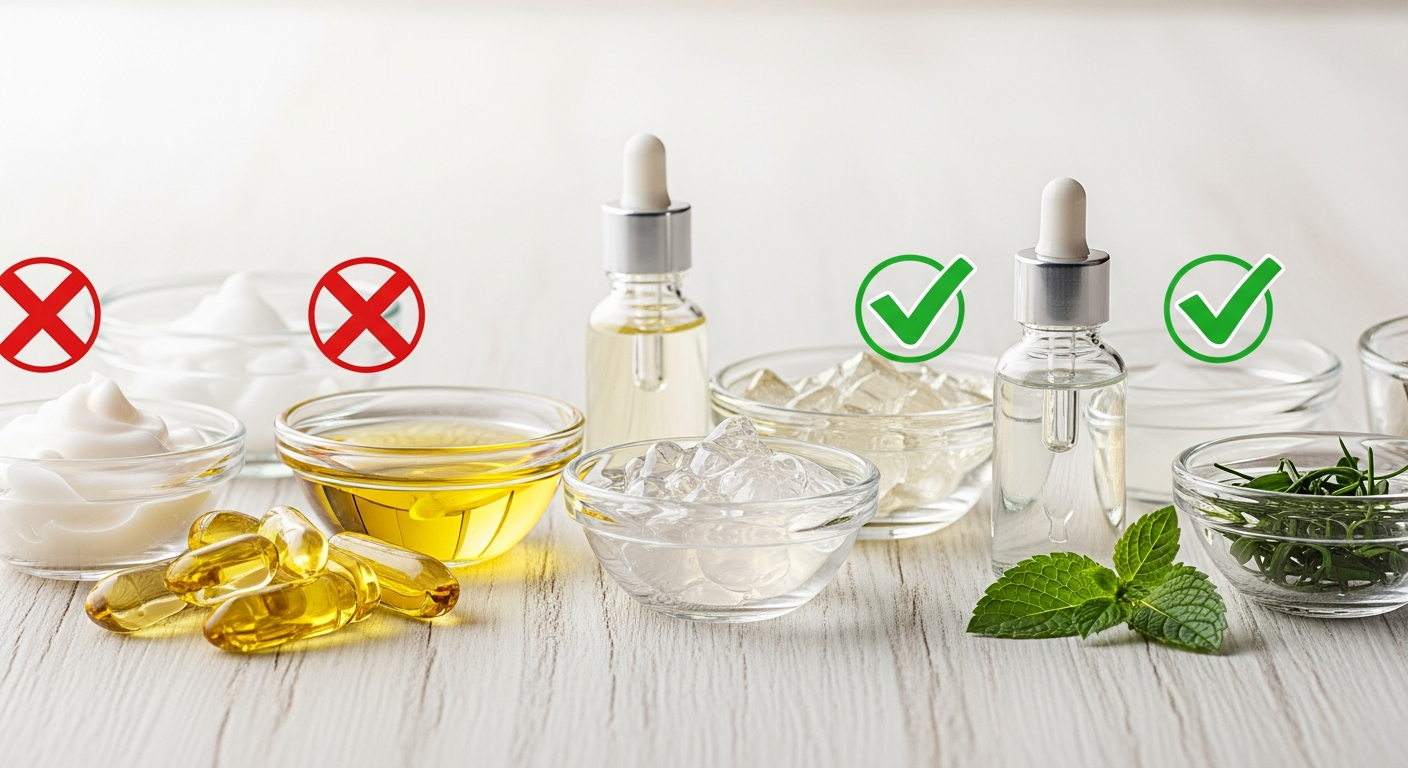
Pore Clogger Checker: Is Your Skincare Causing Breakouts using pore clogging ingredients? You’ve done everything right. You bought that expensive cleanser. You splurged on the serum everyone loves. Yet here you are with worse skin than before.
Sound familiar? You’re not alone in this struggle.
The Hidden Problem Behind Skincare Failures
Many of us harm our skin without knowing it. We use products we trust. Instead, these products create new problems.
The beauty industry makes big promises. “Revolutionary formulas” sound amazing. But here’s the truth: more ingredients don’t mean better results.
Popular products often contain pore clogging ingredients. These hide behind complex names. Marketing teams tell compelling stories. They don’t explain what’s actually inside.
Breaking Free from Skincare Confusion
Breaking free requires understanding. You need to know about pore-clogging ingredients. The comedogenic scale should become your best friend.
Ancient wisdom might have answers. Modern cosmetics overcomplicate things. Take Egyptian Magic as an example. This formula contains just five simple ingredients.
Why Simple Often Works Better
Simple works because fewer ingredients mean fewer problems. Your skin barrier needs gentle care. Complex formulas can overwhelm damaged skin.
Nature provides effective solutions. Honey moisturizes and heals. Beeswax protects without clogging pores. These ingredients work together perfectly.
Your Journey to Clear Skin Starts Here
By the end of this guide, you’ll feel confident. You’ll make smart decisions about skincare. This knowledge could save your complexion and wallet.
But how exactly do ingredients clog pores? How can you spot the problematic ones?
What Makes Ingredients Comedogenic?
The word “comedogenic” might sound scary. Actually, it’s quite simple. It comes from “comedo” – blackheads and whiteheads.
Understanding the Rating System
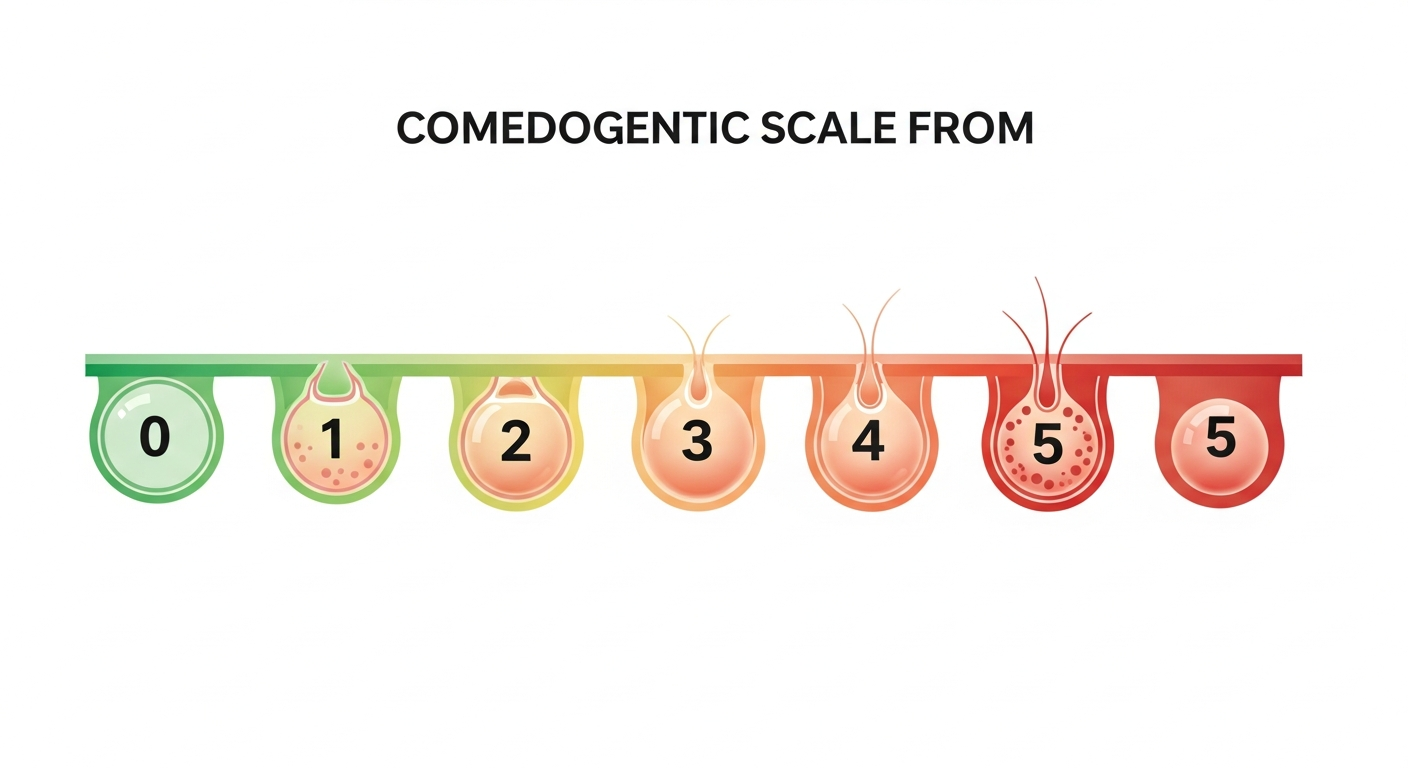
Scientists use a rating scale from 0 to 5:
- 0 = won’t clog pores
- 1 = very low chance
- 2 = low chance
- 3 = moderate chance
- 4 = high chance
- 5 = very high chance
This scale helps you make smart choices. You can pick products based on science. Not marketing claims or high prices.
How Scientists Test Ingredients
Researchers use two main methods. The first involves rabbit ears. Scientists apply substances to rabbit ears. Then they check for clogged pores.
Human testing provides better data. But it has challenges. People apply test substances to their skin. Researchers examine them for problems.
Why Individual Differences Matter
Everyone’s skin is different. What clogs one person’s pores might be fine for another. Several factors affect responses:
- Skin type and genetics
- Hormone levels
- Overall skin health
- Environmental conditions
Rating Limitations
This explains frustrating experiences. Your friend might love a product you can’t use. A moisturizer with great reviews might break you out.
Comedogenic ratings provide useful guidelines. However, they’re not perfect predictions. Think of them as probability indicators.
Concentration Matters Too
Ingredient amount affects safety. A high-rated ingredient might be fine in tiny amounts. It could work well mixed with helpful ingredients.
Some ingredients are risky alone. They become safer at low concentrations. Good products make dangerous ingredients work safely.
Marketing Claims vs Reality
Here’s something important: “non-comedogenic” labels aren’t regulated. Companies can make these claims without proof. This makes your ingredient knowledge crucial.
Marketing promises don’t always match reality. This is why understanding ingredients matters so much.
Common Pore-Clogging Ingredients to Avoid
Armed with rating knowledge, let’s identify problem ingredients. These troublemakers hide in many products. They appear in drugstore and luxury items alike.
The Worst Offenders (Rating 4-5)
Coconut Oil tops our troublemaker list. Despite its “natural miracle” reputation, it rates 4-5. Its structure allows deep pore penetration. Once inside, it can create blockages.
Coconut oil works great on body skin. But facial use often causes breakouts. Problems usually appear around jawlines and cheeks.
The Synthetic Troublemaker
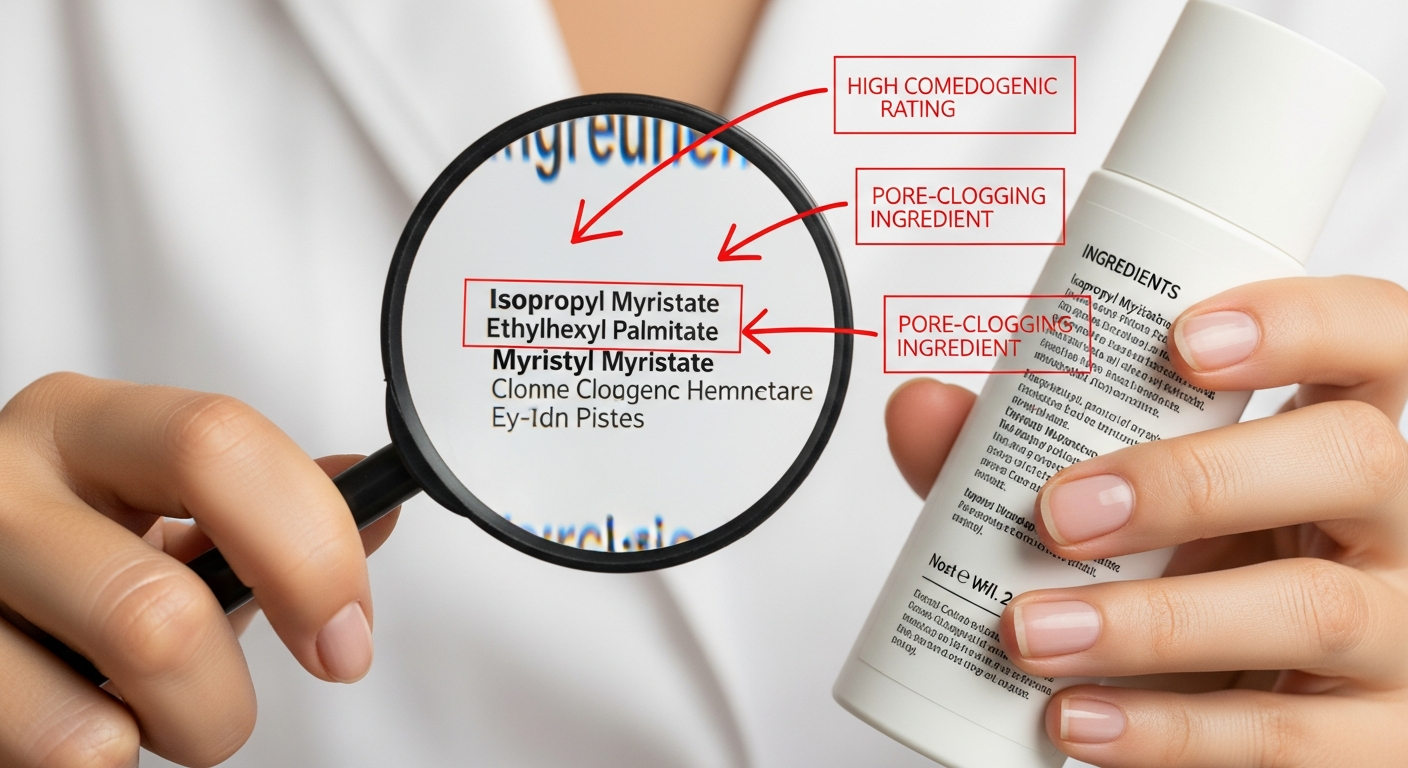
Isopropyl Myristate gets the highest rating of 5. This synthetic ingredient appears in many lotions. It’s common in makeup products too.
Companies love it because it feels silky. However, its perfect score spells trouble. It almost guarantees pore blockage in sensitive people.
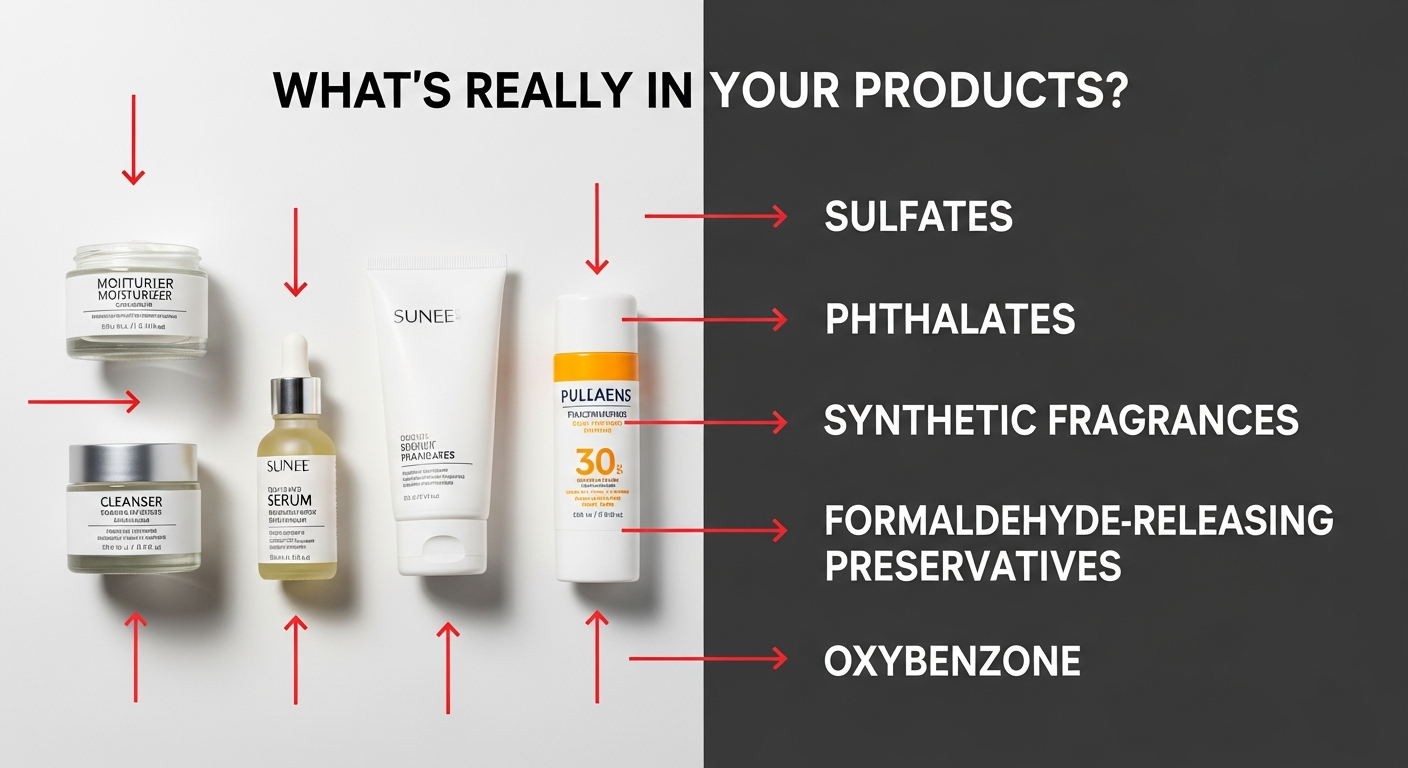
Natural Doesn’t Always Mean Safe
Lanolin shows how natural ingredients can be problematic. Lanolin comes from sheep’s wool. People have used it for centuries.
Its moisturizing ability is impressive. However, this same property creates problems. What makes it moisturizing also makes it comedogenic.
Other Common Culprits
Cocoa Butter faces similar challenges. This luxurious ingredient provides rich moisturizing. It smells like chocolate naturally.
However, its heavy nature creates problems. This is especially true for facial use. Anyone prone to breakouts should be careful.
Wheat Germ Oil illustrates an important point. Nutrient-rich doesn’t mean skin-friendly. This oil contains lots of vitamin E.
However, its heavy structure creates issues. Its comedogenic rating makes facial use risky. This happens despite impressive nutrients.
Moderate Risk Ingredients (Rating 2-3)
Moving into moderate categories helps understand nuance. Sweet Almond Oil and Grapeseed Oil fall here. Many people use these successfully.
However, sensitive individuals might have problems. They might notice subtle breakouts over time. Effects aren’t always immediately obvious.
The Clean Beauty Trap
Natural origin doesn’t guarantee safety. Coconut oil and cocoa butter are completely natural. Yet they’re highly problematic for acne-prone skin.
This challenges clean beauty assumptions. Sometimes synthetic ingredients are safer choices.
Why Problems Persist
Understanding formulator choices helps. Many comedogenic ingredients provide valuable benefits:
- They create appealing textures
- They improve spreadability
- They enhance moisturizing
- They extend shelf life
Formulators often prioritize feel over function.
Now that you know problem ingredients, you need label-reading skills.
How to Read Skincare Labels Like a Pro
Reading labels effectively saves money and skin. The beauty industry relies on confused consumers. With right knowledge, you can decode any product.
Understanding Scientific Names
Label reading starts with INCI naming. These are scientific ingredient names. They ensure consistency across brands.
However, they make familiar things seem foreign. Water appears as “Aqua.” Vitamin C becomes “Ascorbic Acid.”
Don’t let complex names discourage you. Many websites translate INCI names instantly. They provide common terms and safety ratings.
The Concentration Clue
Ingredient order reveals crucial information. By law, ingredients list by percentage. Highest concentrations appear first.
This means the first five ingredients make up most formulas. Spotting problematic ingredients here is a red flag. They’re likely present in significant amounts.
The One Percent Rule
Here’s an important exception. Ingredients below 1% can list in any order. This affects the bottom portion of lists.
Everything after known low-concentration ingredients might not follow order. This makes analysis more challenging.
Your Analysis System
Start by scanning for obvious culprits. Look for coconut oil, isopropyl myristate, or lanolin. Spotting these in top positions is a warning.
Next, research unfamiliar ingredients. Use reliable databases for information. Building a personal reference speeds future sessions.
Marketing vs Reality
Marketing claims often contradict ingredient lists. “Non-comedogenic” products might contain moderate-risk ingredients. “Natural” labels don’t guarantee safe formulations.
Pay attention to impressive-sounding claims. “Dermatologist tested” sounds good. But it doesn’t mean tested for comedogenic effects.
Recognizing Hidden Ingredients
Complex names often hide familiar substances. Learn common patterns. Many problem ingredients follow naming conventions.
Coconut oil might appear as “Cocos Nucifera Oil.” Isopropyl myristate uses its exact scientific name. Building recognition takes time.
The Patch Testing Rule
Always patch test new products. Apply small amounts to inner arms. Try behind ears for 24-48 hours first.
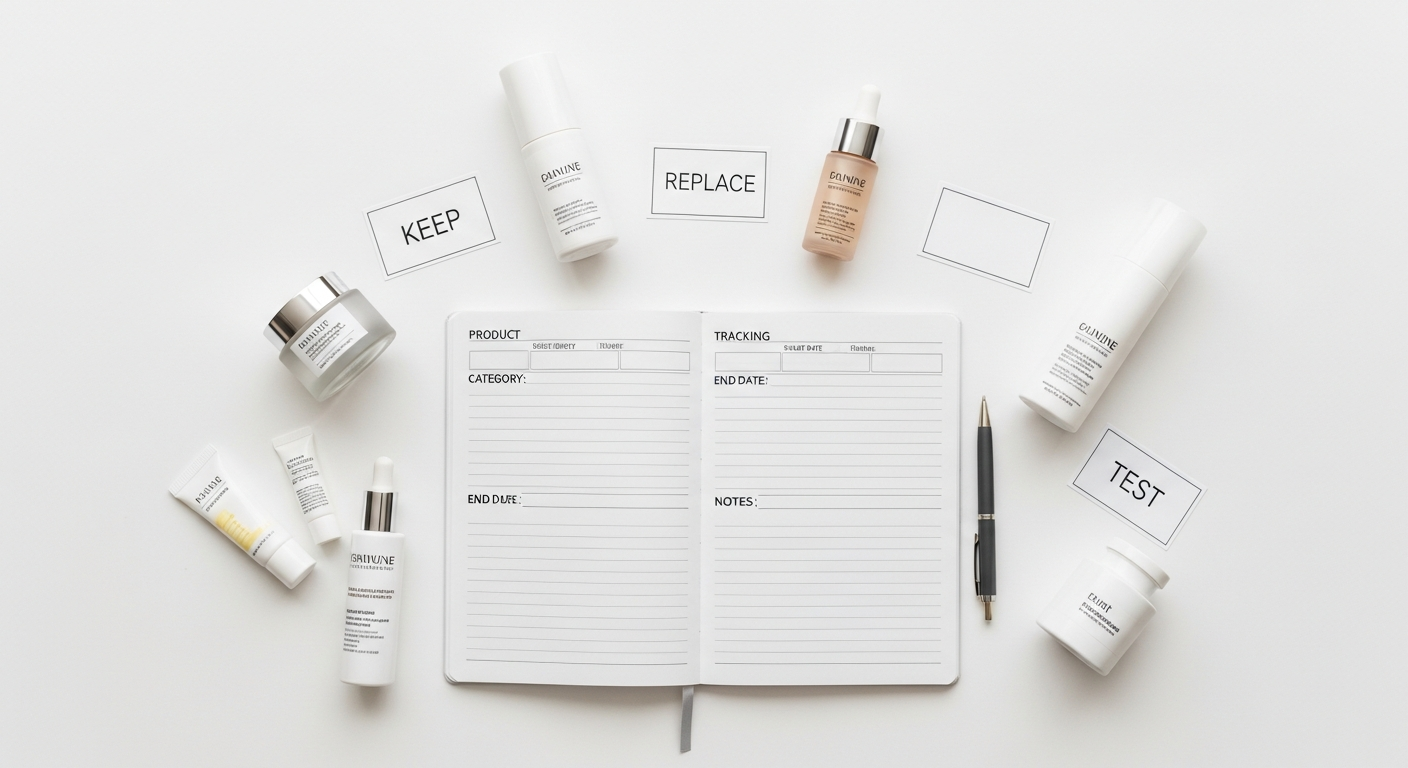
Keep a skincare journal too. Record products you try. Note key ingredients. Track skin responses.
Professional Analysis Tools
Smartphone apps help with analysis. You can scan barcodes easily. Some apps photograph ingredient lists.
However, use these alongside growing knowledge. They provide starting points, not final answers.
Building Your Skills
The goal isn’t becoming a chemist overnight. Develop enough knowledge for informed decisions. This protects you from marketing manipulation.
Armed with label-reading skills, you might wonder about simpler approaches.
The Power of Simple Skincare
Modern skincare involves complex routines. Multiple serums, essences, and treatments are common. Yet evidence suggests simpler approaches work better.
Effective skincare doesn’t need dozens of ingredients. Sometimes powerful results come from pure formulations.
The Complexity Problem
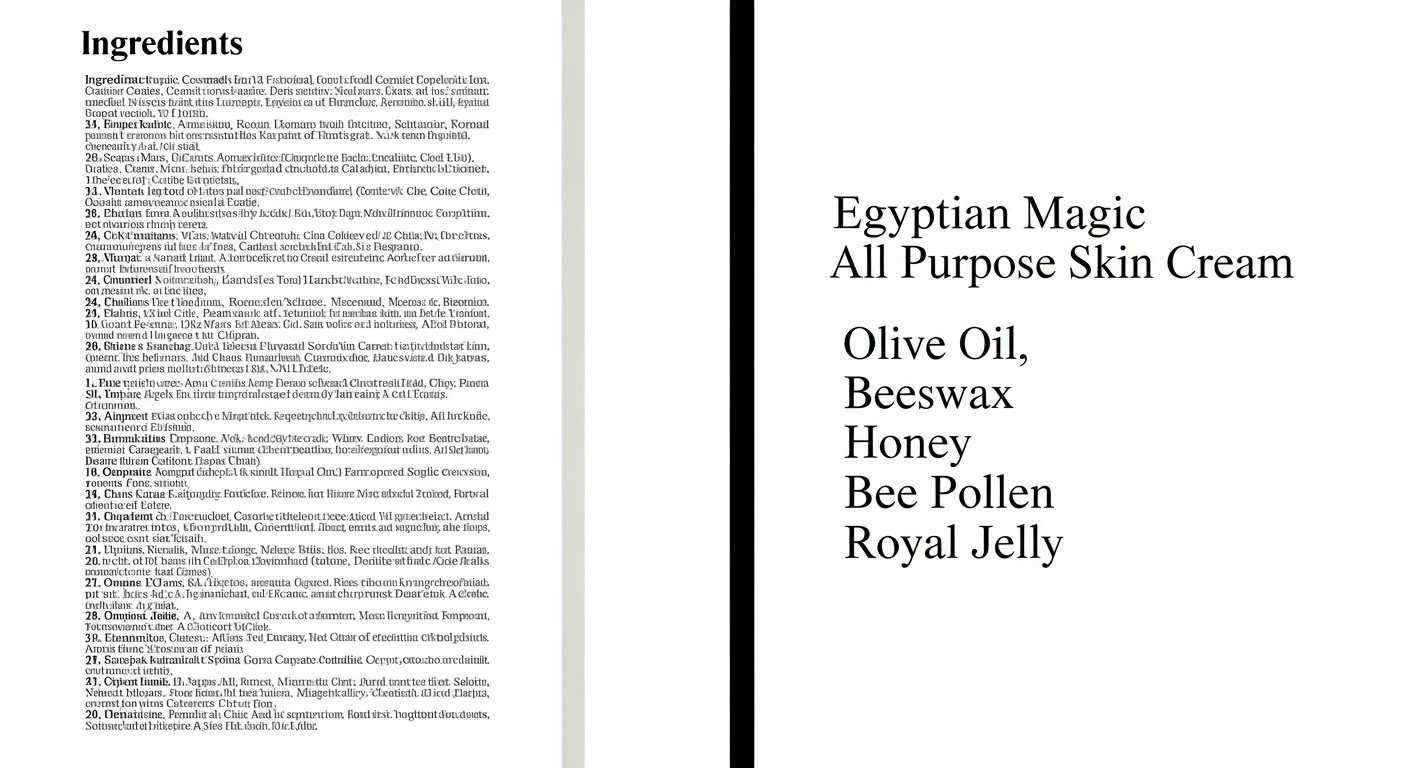
Consider today’s popular moisturizers. They often contain 20 to 50 ingredients. These include multiple preservatives and emulsifiers. They feature fragrance and active ingredients.
Each additional ingredient represents potential problems. It could cause irritation or sensitivity. This creates complex webs of possible reactions.
Egyptian Magic: Simple Success
Egyptian Magic shows minimalist power. Its five-ingredient formula hasn’t changed since 1991. This approach offers compelling results.
Analyzing each ingredient reveals immediate transparency:
Honey (Rating: 0) serves as the foundation. Its zero rating makes it ideal. This includes even acne-prone skin.
Raw honey has natural antibacterial properties. These fight acne-causing bacteria. Its humectant qualities draw environmental moisture.
Additional Natural Powerhouses
Royal Jelly (Rating: 0) brings additional benefits. It maintains the non-comedogenic profile. This nutrient-dense substance feeds developing larvae.
Royal jelly contains proteins and vitamins. These support skin healing and regeneration. Its anti-inflammatory properties calm irritated skin.
Propolis (Rating: 0) continues the bee-derived focus. Bees create this resinous substance. They use it to seal hives.
Its antimicrobial properties are remarkably effective. Beehives stay sterile despite housing thousands of organisms.
The Structure Provider
Beeswax (Rating: 0-2) provides formula structure. It maintains skin compatibility for most people. This natural emollient creates protective barriers.
Beeswax helps seal in moisture. It creates breathable protection without blocking pores completely.
The Olive Oil Context
Olive Oil (Rating: 2) represents moderate comedogenic rating. Yet its inclusion demonstrates important principles. Consider ingredients within formulation context.
Olive oil might be problematic alone. However, behavior changes in specific combinations. The concentration matters significantly.
Combined with antimicrobial ingredients, it creates beneficial effects. Even sensitive individuals often use it successfully.
The Transparency Advantage
Egyptian Magic’s transparency cannot be overstated. When you know exactly what’s inside, decisions become easier. You can determine skin suitability immediately.
If reactions occur, identification becomes simple. You can easily determine responsible ingredients. This beats detective work with complex formulas.
Historical Validation
Ancient beauty practices inspire this formula. They developed through generations of observation. Modern science improves understanding.
However, it has created complication tendencies. Sometimes traditional approaches work better than modern innovations.
Quality Through Focus
Simple formulations allow higher quality ingredients. Rather than spreading costs across dozens of items, focus enables investment. High-grade honey replaces processed alternatives.
Royal jelly stays fresh and potent. It’s not a minor component for labels.
Economic Benefits
Fewer ingredients create more stability. They require less complex testing. They face fewer regulatory hurdles.
These savings benefit consumers. They can invest in better raw materials. This creates superior value.
Building Personal Understanding
Understanding simplicity doesn’t mean avoiding all complex formulations. It means appreciating effective combinations. Ancient wisdom and modern understanding work together.
Egyptian Magic’s approach demonstrates important principles. They create effective, transparent solutions.
While ingredient choice is crucial, other factors matter too.
Beyond Ingredients: What Else Affects Skin
Understanding comedogenic ingredients provides foundation knowledge. However, focusing only on labels gives partial pictures. Your skin exists in complex ecosystems.
Multiple factors influence it beyond ingredient lists.
Application Technique Matters
How you apply products determines success. Poor technique creates problems regardless of perfect formulations.
Over-cleansing increases breakout risk. Many believe washing more helps clear breakouts. They think scrubbing harder works better.
This aggressive approach often backfires. Excessive cleansing strips natural oils. This disrupts pH balance.
Finding the Right Balance
Under-cleansing allows problem accumulation. Makeup and environmental pollutants build up. This turns good products into pore-clogging layers.
The key lies in gentle but thorough cleansing. Remove impediments without disrupting natural balance.
Application pressure also matters crucially. Harsh rubbing pushes products deeper into pores. It irritates skin and increases inflammation.

Product Amount and Layering
Even good ingredients can cause problems. This happens when you use excessive amounts. Layering multiple oils creates occlusive effects.
This traps bacteria and dead cells. This happens regardless of individual ratings.
Individual Skin Characteristics
Comedogenic ratings provide useful guidelines. However, they don’t account for individual differences. Oily skin often processes oils efficiently.
They might tolerate moderate ingredients fine. Very dry skin might need richer formulations. These could overwhelm normal complexions.
Seasonal Variations
Many people find seasonal changes affect tolerance. Winter products might become problematic in humid summers. Increased heat and humidity change ingredient behavior.
Environmental Influences
High humidity increases problems with comedogenic ingredients. Additional moisture combines with oils and residues. This creates more pore-blocking opportunities.
Air pollution presents significant challenges. Environmental toxins settle on skin throughout days. They mix with skincare and natural oils.
Climate and Weather Effects
Environmental conditions influence ingredient tolerance significantly. High humidity can increase oil production. It makes product absorption harder.
This combination turns moderate ingredients into significant problems. Products sit on surfaces rather than absorbing.
Low humidity can compromise skin barriers. This makes skin more vulnerable to comedogenic ingredients. It increases moisturizing needs simultaneously.
Lifestyle Factors
Stress hormones like cortisol increase oil production. They also increase inflammation. This makes skin more reactive to normally tolerated ingredients.
During high-stress periods, successful products might suddenly cause breakouts.
Sleep quality affects repair processes. Poor sleep influences daily substance processing. Poor sleep makes skin more sensitive.
Dietary and Health Connections
Dietary factors don’t directly relate to topical ingredients. However, they can interact surprisingly. High-glycemic foods increase inflammation and oil production.
This makes skin more susceptible to clogging. Normally fine ingredients become problematic.
Product Freshness Matters
Product freshness represents often-overlooked factors. Oxidized oils become more comedogenic over time. Improper storage alters product chemistry.
Expensive serums that worked beautifully when opened might cause problems months later. This happens with heat, light, or air exposure.
Cross-Contamination Sources
Cross-contamination from external sources sabotages careful routines. Dirty pillowcases and unwashed hands introduce bacteria. These interact with products creating pore-blocking combinations.
Hair products deserve special attention. Many contain highly comedogenic ingredients. These transfer to faces during washing or sleeping.
Even perfect facial routines can cause breakouts. Problematic hair products create issues along hairlines and foreheads.
When Professional Help is Needed
Understanding when to seek help becomes crucial. Multiple factors contribute to persistent problems. They can overwhelm individual management efforts.
Dermatologists can identify underlying issues. These might include hormonal imbalances or medical conditions. These affect skin responses to topical products.
Understanding all these factors empowers better skincare routines.
Your Personal Action Plan
Knowledge without action remains interesting information. Now you understand comedogenic ingredients and skin factors. It’s time for transformation.
Systematic assessment helps you make strategic changes. Avoid random adjustments. Ensure you identify what works.
Start with Complete Audits
Begin with comprehensive skincare audits. Document current routines. Create baselines for measuring improvements.
List every facial product. Include cleansers and moisturizers. Don’t forget makeup and hair products.
For each product, record important details. Note brands and product names. Write complete ingredient lists.
This documentation might seem tedious. However, it provides essential data for identifying patterns.
Research Key Ingredients
Next, research comedogenic ratings. Focus on the first seven ingredients listed. Create simple ranking systems:
High-rating ingredients get replacement priority. Moderate ratings can be addressed later.
Consider frequency and location too. High-comedogenic ingredients in daily products pose more risk. Compare this to occasional-use items.
The Systematic Elimination Method
Rather than replacing everything simultaneously, remove one item at a time. Allow 4-6 weeks between changes. Observe skin responses carefully.
This systematic approach builds clear understanding. You’ll learn how different ingredients affect your individual skin.
Start elimination with obviously problematic products. Target coconut oil or isopropyl myristate items. Replace with simpler, non-comedogenic alternatives.
Develop Your Tracking System
Create tracking systems that correlate changes with improvements. Design simple daily logs. Record new breakouts and skin texture changes.
Record when you introduce products. Note application technique changes too.
Photography provides objective documentation over time. Day-to-day variations make gradual improvements hard to perceive.
Budget-Conscious Replacement
Focus initial investments on frequently used products. Prioritize those with most problematic ingredients.
Highly comedogenic daily moisturizers deserve immediate replacement priority. These take precedence over occasional treatments.
Consider simple, single-ingredient options during transitions. Pure squalane or hyaluronic serums provide safe alternatives.
Patch Testing Protocols
Patch testing becomes essential with new products. Apply small amounts to inner arms. Try behind ears for 24-48 hours first.
This simple step prevents widespread breakouts. These might take weeks to clear completely.
When patch testing indicates safety, introduce gradually. Apply to small areas first. Expand coverage over several days.
Set Realistic Timeframes
Set realistic expectations for the process timeline. Most people need 3-6 months to evaluate and optimize routines. This is especially true addressing multiple problematic products.
Skin improvements often follow gradual patterns. Don’t expect dramatic overnight changes.
Expect some trial and error. Even careful ingredient selection doesn’t guarantee universal compatibility.
Know When to Seek Help
Recognize when DIY analysis reaches limits. Persistent problems despite careful ingredient elimination might indicate underlying factors.
Seek help after systematic changes show no improvement. Allow 3-4 months of consistent efforts first.
Dermatologists can identify medical conditions. These might require different treatment approaches.
Build Your New Routine
Building new routines should prioritize simplicity. Start with basic frameworks:
- Gentle cleanser
- Appropriate moisturizer
- Sun protection
Then gradually add treatments only when needed.
Egyptian Magic’s approach exemplifies simplified strategy. It provides multiple benefits through carefully chosen ingredients.
Ongoing Maintenance
Maintenance ensures improved routines continue serving evolving needs. Seasonal adjustments might require temporary modifications.
Regular routine reviews help assess continuing effectiveness. Consider reviews every three months. This prevents gradual accumulation of unnecessary products.
The Egyptian Magic Alternative
For those seeking simple starting points, Egyptian Magic offers transparent solutions. The five-ingredient approach eliminates complexity guesswork.
Transparency makes compatibility determination easy. If it works, you’ve identified five effective ingredients. If not, you can evaluate which might be problematic.
By taking these steps, you develop lifelong skincare knowledge.
Conclusion
Your journey from frustration to confidence doesn’t happen overnight. However, gained knowledge provides roadmaps for better choices. These choices support skin health and overall well-being.
Understanding comedogenic ingredients transforms skincare relationships. Learning effective label reading empowers better decisions. Recognizing multiple pore health factors provides comprehensive understanding.
This transforms you from passive consumer to empowered decision-maker. You can navigate complex beauty industries with clarity. You understand that natural doesn’t automatically mean better.
The Simple Truth
Expensive doesn’t equal effective. Complex doesn’t necessarily mean superior. Beauty industry marketing works tirelessly convincing consumers otherwise.
But comedogenic science exploration shows simple transparency often delivers better results. Traditional approaches like Egyptian Magic prove this point.
Newfound analysis abilities provide lifelong value. Understanding comedogenic ratings helps immensely. Recognizing individual skin patterns creates success foundations.
These skills serve you beyond current routines. They help evaluate future products. You can adapt to changing skin needs. You avoid costly impulse purchase mistakes.
The Holistic Advantage
Holistic understanding empowers comprehensive problem-solving. You can address challenges from multiple angles. Don’t expect single products to provide miraculous results.
This approach acknowledges skin health complexity. It provides practical strategies for managing controllable variables.
Remember achieving clearer skin is rarely linear. Setbacks and variations are normal journey parts. Systematic approaches help identify and address issues.
The Broader Impact
Emphasis on simplicity and transparency reflects broader trends. Conscious consumption and informed decision-making grow across life aspects.
By choosing products based on understanding rather than marketing manipulation, you join growing communities. These consumers prioritize substance over style.
Most significantly, this journey represents meaningful self-care. It goes beyond surface-level beauty concerns. Taking control of skin products matters. Understanding choice effects on well-being is important.
Ready to Experience the Egyptian Magic Difference?
Transform your skincare routine with the original 5-ingredient formula. Egyptian Magic’s transparent approach means you know exactly what you’re putting on your skin.
No hidden comedogenic surprises. No complex formulations to decode. No wondering whether expensive means effective.
When you choose simplicity over complexity, you make powerful statements. Choose transparency over marketing promises. Select time-tested ingredients over latest trends.
Discover the power of honey’s antibacterial properties. Experience royal jelly’s skin-nourishing nutrients. Benefit from propolis’s anti-inflammatory effects. Enjoy beeswax’s gentle protection.
Give your skin the clarity it deserves. Use ingredients you can pronounce, understand, and trust.
Shop Egyptian Magic Now and experience what happens when ancient wisdom meets modern understanding. Learn more about our five simple ingredients and discover why sometimes the best solutions hide in plain sight.